Pension Lump Sum Tax: What You Must Know Now in Ireland.
Share this story, choose your platform!
How Much Pension Lump Sum Tax Do You Pay in Ireland?
Wondering how much pension lump sum tax you’ll pay in Ireland in 2026? Here’s a plain-English guide to the rules, especially if you have existing pension pots and are thinking about accessing a lump sum from age 50.
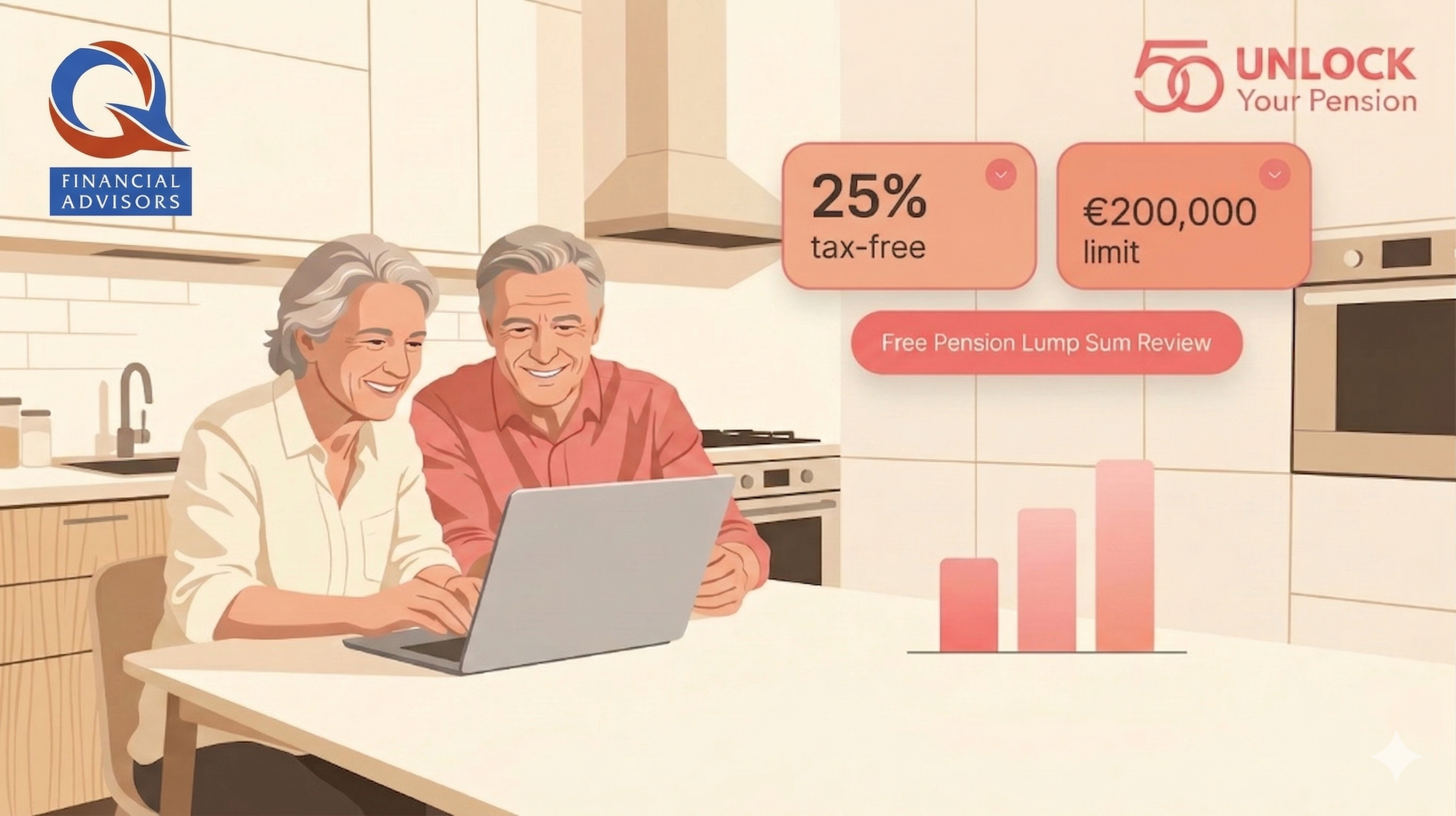
In Ireland, you can usually take up to 25% of your pension as a lump sum when you retire or, in some cases, from age 50. The good news? A portion of that money is completely tax free. The important number to know is €200,000, which is the maximum lifetime amount you can receive across all your pensions without paying income tax on the lump sum.
Above €200,000 but below €500,000 you pay 20% income tax. Above €500,000 you pay tax at your marginal rate (currently up to 40%). With cost of living pressures continuing into 2026, many people aged 50 and over in Ireland are asking: “How much pension lump sum tax will I actually have to pay?”
This guide explains, in very simple language, exactly how pension lump sum tax works in Ireland in 2026 and what to watch out for if you have more than one pension.
Important: This article is general information only and does not constitute personalised tax or financial advice. Tax rules can change. Always speak with a regulated financial adviser before making any pension decisions.
How Pension Lump Sum Tax Bands Work in Ireland (2026 Overview)
Revenue sets out three clear bands for pension lump sum tax in Ireland:
| Total Lifetime Lump Sums | Income Tax Rate |
|---|---|
| Up to €200,000 | 0% (Tax Free) |
| €200,001 to €500,000 | 20% |
| Over €500,000 | Marginal rate (up to 40%) |
Good to know: USC and PRSI generally do not apply to the retirement lump sum itself. However, they do apply to your ongoing pension income after the lump sum is taken.
These bands are based on your total lifetime retirement lump sums, meaning every cent you have taken (or will take) from every pension you have ever had. The €200,000 tax free pension limit is not per pension; it is one single lifetime limit. Remember, rules can change so always check current Revenue guidance on retirement lump sums or speak with a qualified adviser.
Where the 25% Tax Free Pension Lump Sum Fits In
For most occupational (workplace) pensions, including defined contribution, defined benefit, and executive pensions, your scheme rules typically let you take up to 25% of your fund as a lump sum. That 25% counts towards the €200,000 lifetime tax free limit — and any amount above the limit attracts pension lump sum tax.
Simple Examples
Example 1: Your pension fund is €160,000. You take 25% = €40,000. This is well under the €200,000 lifetime limit, so the entire €40,000 is tax free and you pay zero pension lump sum tax.
Example 2: Over your lifetime, your total pension lump sums reach €210,000. The first €200,000 is tax free. The remaining €10,000 is taxed at 20%, meaning you would owe €2,000 in pension lump sum tax on that portion.
Multiple Pension Pots and Pension Lump Sum Tax: One €200,000 Lifetime Limit
This is where many people get caught out on pension lump sum tax. If you have two or three preserved pensions from different employers, the €200,000 tax-free limit applies across all of them combined. It is not a separate €200k for each pension.
Worked Example: Three Pensions
🏢 Pension A (former employer): Lump sum taken = €80,000
🏢 Pension B (former employer): Lump sum taken = €95,000
🏢 Pension C (current employer): Lump sum you want to take = €50,000
Total: €80k + €95k + €50k = €225,000. The first €200,000 is tax free; the remaining €25,000 is taxed at 20% (= €5,000 pension lump sum tax).
Note: This assumes the scheme rules for each pension allowed these specific lump sum amounts to be taken.
What About the Standard Fund Threshold (SFT)?
The Standard Fund Threshold (SFT) limits the total value of your combined pensions to €2 million. Anything above this is subject to a 40% chargeable excess tax. If your total pension pots are anywhere near this limit, seek regulated financial advice before making decisions. You can read more about the SFT on the Citizens Information pensions page.
Can You Cash In Your Pension at 50 and Avoid Pension Lump Sum Tax?
In many cases, yes — you can stay within the tax-free limit. If you have an occupational pension with a former private-sector employer, the scheme rules may allow you to access your benefits from age 50. Public service pensions usually have later access ages.
The key thing to understand about pension lump sum tax: if you take a 25% tax free pension lump sum at age 50 or 52, that amount chips away at your €200,000 lifetime allowance. This means you may have less tax-free headroom later when you access other pensions at full retirement.
Maria, age 52, has a preserved DC pension worth €240,000 from a former employer. She takes 25% = €60,000 tax-free to clear her mortgage. She has now used €60,000 of her €200,000 lifetime allowance, leaving €140,000 of tax-free headroom for future pensions.
At 65, Maria accesses a different preserved pension from another former employer. Her pension fund is €400,000. She takes 25% = €100,000. She has already used €60,000, so her new total is €160,000, still under €200,000, so the full €100,000 is tax free.
If Maria had a third pension and took another €60,000 lump sum, her total would be €220,000. The last €20,000 would be taxed at 20%, costing her €4,000 in pension lump sum tax.
Pension Lump Sum Tax vs. Tax on Pension Income: What’s the Difference?
After you’ve taken your lump sum, the rest of your pension is paid out as regular income. This income is taxed under PAYE just like a salary, and is also subject to:
- USC (Universal Social Charge)
- PRSI (if you are under 66)
This is completely separate from pension lump sum tax. Your regular pension income is simply taxed under PAYE just like normal employment income.
Common Myths About Pension Lump Sum Tax and the €200,000 Limit
❌ Myth: “The €200k limit resets for each pension.”
✅ Fact: No. It is one lifetime limit across all pension lump sums combined.
❌ Myth: “25% of any fund is always fully tax free.”
✅ Fact: Only if your total lifetime lump sums stay under €200,000. Once you have used up that allowance, further lump sums attract pension lump sum tax.
❌ Myth: “I don’t need to worry about the Standard Fund Threshold.”
✅ Fact: If your combined pension pots approach or exceed €2 million, the SFT rules can result in a significant 40% tax charge on the excess.
❌ Myth: “Taking a lump sum at 50 has no impact on later retirement.”
✅ Fact: It absolutely does. Every euro you take now reduces your tax-free allowance and your pension income in the future.
Simple Checklist Before Taking a Pension Lump Sum
Frequently Asked Questions About Pension Lump Sum Tax
It is in total. The €200,000 lifetime tax-free limit applies across all pension lump sums you take from every pension you have ever had. It is not per pension.
Generally, no. USC and PRSI do not normally apply to the retirement lump sum itself. However, they do apply to your regular pension income after the lump sum.
Amounts between €200,001 and €500,000 are taxed at 20% income tax. Amounts over €500,000 are taxed at your marginal rate (up to 40%).
It is subject to 20% income tax. For example, if your total lifetime lump sums come to €250,000, the last €50,000 is taxed at 20%, giving a pension lump sum tax bill of €10,000.
Yes, in most cases. Taking a lump sum from a former employer’s pension does not prevent you from continuing to work, whether for the same or a different employer.
Your pension scheme administrator is responsible for reporting lump sum payments to Revenue and deducting any pension lump sum tax due before paying you.
Not Sure How Much Tax-Free Cash You Can Take?
Get a free review of your existing pension pots with UnlockYourPension.ie. We’ll help you understand how much of your €200,000 tax-free allowance you’ve used, whether you can access a lump sum now, and how much pension lump sum tax you might owe.
Get Your Free Pension Lump Sum ReviewExplore All Our Pension Guides
Expert guides across 12 sectors. Find the right one for your situation.
Guides coming soon — take your free pension assessment in the meantime.
Not sure which guide is right for you?
Take our free 2-minute pension assessment and get expert advice within 24 hours.
Start Free Assessment →